CORE VIRTUES
  • Home
  • Our Approach
    • Program Overview
    • Why Stories?
    • Implementation
    • The Morning Gathering
    • Suggested Book Lists >
      • Year One Suggested Book Lists
      • Year Two Suggested Book Lists
      • Year Three Suggested Booklists
      • PDF Book Lists
    • Digging Deeper
    • Telling our Stories >
      • Blog Archives >
        • 2018-2019
        • 2019-2020
        • 2020-2021
        • 2021-2022
        • 2022-2023
        • 2023-2024
        • 2024-2025
  • About Us
    • Mission
    • A Little History >
      • Mary Beth Klee
    • Core Virtues Schools
    • Our First Champion >
      • The Portsmouth Declaration
    • Newsletters
    • Contact Us
  • Virtue of the Month
    • Virtue Cycle Definitions
    • Virtue Index
    • November
    • December
    • January
    • February
    • March
    • April
    • May
    • June
    • September
    • October
  • Cycle of Virtues
    • Year 1
    • Year 2
    • Year 3
  • Heroes-Lives to Learn From
    • November Heroes
    • December Heroes
    • January Heroes
    • February Heroes
    • March Heroes
    • April Heroes
    • May Heroes
    • June Heroes
    • September Heroes
    • October Heroes
  • Holidays
    • Labor Day
    • Veteran's / Memorial Day
    • Thanksgiving
    • Hanukkah
    • Christmas
    • Martin Luther King Jr
    • Presidents' Day
    • Black History Month
    • Saint Patrick's Day
    • Women's History Month
    • Passover
    • Easter
    • Ramadan
    • Immigrant Heritage Month
  • Poetry
  • Core Knowledge Connections
    • Kindergarten
    • First Grade
    • Second Grade
    • Third Grade
    • Fourth Grade
    • Fifth Grade
    • Sixth Grade
  • Links
  • Anthologies
  • Chapter Books
  • Parent Teacher Bibliography
  • Schools of Faith
    • Saint of the Month >
      • November Saints
      • December Saints
      • January Saints
      • February Saints
      • March Saints
      • April Saints
      • May Saints
      • June Saints
      • September Saints
      • October Saints
    • Jewish Schools
    • Christian Schools
    • Islamic Schools
    • Eastern Faith Traditions
  • Grade Level Goals
    • Kindergarten Goals
    • First Grade Goals
    • Second Grade Goals
    • Third Grade Goals
    • Fourth Grade Goals
    • Fifth Grade Goals
    • Sixth Grade Goals
  • Store
  • Privacy Policy
  • Home
  • Our Approach
    • Program Overview
    • Why Stories?
    • Implementation
    • The Morning Gathering
    • Suggested Book Lists >
      • Year One Suggested Book Lists
      • Year Two Suggested Book Lists
      • Year Three Suggested Booklists
      • PDF Book Lists
    • Digging Deeper
    • Telling our Stories >
      • Blog Archives >
        • 2018-2019
        • 2019-2020
        • 2020-2021
        • 2021-2022
        • 2022-2023
        • 2023-2024
        • 2024-2025
  • About Us
    • Mission
    • A Little History >
      • Mary Beth Klee
    • Core Virtues Schools
    • Our First Champion >
      • The Portsmouth Declaration
    • Newsletters
    • Contact Us
  • Virtue of the Month
    • Virtue Cycle Definitions
    • Virtue Index
    • November
    • December
    • January
    • February
    • March
    • April
    • May
    • June
    • September
    • October
  • Cycle of Virtues
    • Year 1
    • Year 2
    • Year 3
  • Heroes-Lives to Learn From
    • November Heroes
    • December Heroes
    • January Heroes
    • February Heroes
    • March Heroes
    • April Heroes
    • May Heroes
    • June Heroes
    • September Heroes
    • October Heroes
  • Holidays
    • Labor Day
    • Veteran's / Memorial Day
    • Thanksgiving
    • Hanukkah
    • Christmas
    • Martin Luther King Jr
    • Presidents' Day
    • Black History Month
    • Saint Patrick's Day
    • Women's History Month
    • Passover
    • Easter
    • Ramadan
    • Immigrant Heritage Month
  • Poetry
  • Core Knowledge Connections
    • Kindergarten
    • First Grade
    • Second Grade
    • Third Grade
    • Fourth Grade
    • Fifth Grade
    • Sixth Grade
  • Links
  • Anthologies
  • Chapter Books
  • Parent Teacher Bibliography
  • Schools of Faith
    • Saint of the Month >
      • November Saints
      • December Saints
      • January Saints
      • February Saints
      • March Saints
      • April Saints
      • May Saints
      • June Saints
      • September Saints
      • October Saints
    • Jewish Schools
    • Christian Schools
    • Islamic Schools
    • Eastern Faith Traditions
  • Grade Level Goals
    • Kindergarten Goals
    • First Grade Goals
    • Second Grade Goals
    • Third Grade Goals
    • Fourth Grade Goals
    • Fifth Grade Goals
    • Sixth Grade Goals
  • Store
  • Privacy Policy

​Telling Our Stories

Announcing... The Janus Award

1/9/2024

1 Comment


​The Janus Award

Picture

 
​For Intellectual
​Courage & Common Sense

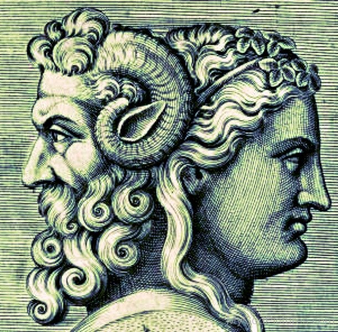
Janus, for whom the month of January is named, is the Roman god who has one face staring backward and another peering forward.  He is a great metaphor for this month, having ended one chapter even as we open another.  Some images of Janus show the backward-looking visage as bearded and horned, while forward-facing Janus is clean-shaven and smooth cheeked.  Backward-facing Janus scowls at the weight of the past. Forward-looking Janus smiles: he’s a youth with the added wisdom of experience literally behind him.  He’s ready to GO FORTH ON GOOD PATHS. 
  
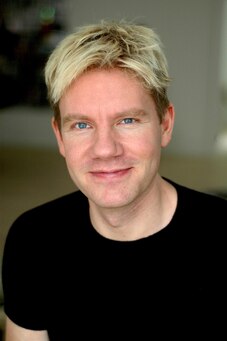
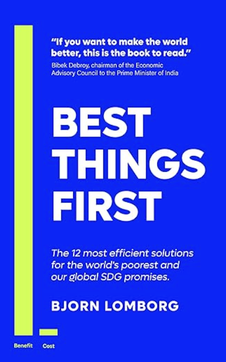
My candidate for the Janus Award this January, a just-now designed award for intellectual courage and common sense, is Bjorn Lomborg.  The Danish economist looks the part.  He is smooth-cheeked and perennially boyish, though next year he will turn 60 (with wisdom of the past behind him).  Throughout his career, he has specialized in clear-eyed and unexpected thinking, championing workable solutions to thorny issues with buoyant enthusiasm.  But Lomborg’s  most recent book, Best Things First, is arguably his finest.  In it he proposes the twelve most efficient solutions for aiding the world’s poorest, and for fulfilling the UN’s very ambitious sustainable development goals (SDG).  


A little background:  in 2012 (pre-pandemic Eden and buoyed by progress made in meeting eight UN Millennium Development Goals) UN teams took up a new task: deciding goals to be met by 2030.  These were dubbed “Sustainable Development Goals.”  Rather than replicate the successful Millennium model of specific targeted goals, world leaders came up with seventeen major rubrics and 169 total goals that promised numerous wonders by 2030:  the eradication of poverty, hunger, and disease.  An end to war, a halt to climate change.  The advance of education and the abundance of clean water.  Gender equality. The extirpation of corruption and the end of food waste.  And many more.  Organizational psychologists insist that if you have more than three priorities, you have none—so this was problematic.   Then came the pandemic—which affected all of us, but devastated those most in need.  African nations fell further behind than ever before.
Picture
In his most recent book Bjorn Lomborg looks back at how we got here, and then reflects on the fact that we are not even close to meeting the new Sustainable Development Goals.  But we could get much closer much faster and for a very reasonable amount of money, he argues.  “Our goal is to pinpoint where we can create the most value for humanity per dollar, rupee, or shilling spent.” Where is the biggest bang for our buck?  

Lomborg leads off with a clear-eyed observation: “We all want a better world. Unfortunately, our efforts are often hampered by wanting to achieve not just some but all good things, at once, many of which are nearly impossible, prohibitively expensive, or terribly inefficient, or all these things at once. So this book outlines how to do the best things first.”

His twelve “best things” solutions (each a chapter) target tuberculosis, maternal and newborn health, malaria, nutrition, chronic disease, childhood immunization, education, agricultural R&D, e-procurement, land tenure security, trade and skilled migration.  In twelve peer-reviewed, data-rich studies he concludes that if the world spent $35 billion dollars yearly —which is about the amount that we spend on cosmetics—we could dramatically improve the lives of the world’s poorest.  Compare this with “it takes trillions” annually to solve climate change. (John Kerry)​

PictureBjørn Lomborg
Lomborg estimates that for that amount “we can save 4.2 million lives annually, and we can make the poorer half of the world more than a trillion dollars better off each and every year. We can almost entirely end tuberculosis, which needlessly kills more than a million people each year. We can reduce the death toll of chronic diseases by 1.5 million… We can increase yields in agriculture, making farmers produce more, consumers pay less, while avoiding hunger for more than a hundred million people. And we can ensure almost every kid in the poorer half of the world actually learns while they’re in school, thus raising these children’s eventual incomes collectively by more than $600 billion per year. In short we can achieve a vast amount while spending relatively little.”

While chock full of data, the book is very readable. Lomborg intends it for policy makers and philanthropists and for all people of good will who are looking for concrete ways to make a difference. “Please pick one of these twelve areas for your coming investments,” Lomborg urges.  Those investments can be investments of time and attention too – particularly as we ask students to think about creating a better world.  It’s not all about recycling.

It takes intellectual courage to promote solutions that are at once simple and effective, but outside the mainstream view of immediate imperatives.  It would be easier to champion trillions for climate change.  Still, Lomborg is making inroads.  We can’t do everything at once, he cautions the UN.  Let’s do the best things first.  The endorsement of his work is coming from sources as diverse as Bill Gates, Larry Summers, Jordan Peterson, Terrence Keeley, and international development officers worldwide.  Now, if we could just start charging forward on these good paths…  That’ll take courage.

Mary Beth Klee 
​

1 Comment

    Author

    Write something about yourself. No need to be fancy, just an overview.

    Archives

    May 2025
    April 2025
    March 2025
    February 2025
    January 2025
    December 2024
    October 2024
    September 2024
    August 2024
    July 2024
    June 2024
    May 2024
    April 2024
    March 2024
    February 2024
    January 2024
    December 2023
    November 2023
    September 2023
    August 2023
    July 2023
    June 2023
    May 2023
    April 2023
    March 2023
    February 2023
    January 2023
    December 2022
    November 2022
    October 2022
    September 2022
    June 2022
    May 2022
    April 2022
    March 2022
    February 2022
    January 2022
    December 2021
    November 2021
    October 2021
    September 2021
    July 2021
    May 2021
    April 2021
    March 2021
    February 2021
    January 2021
    December 2020
    November 2020
    October 2020
    August 2020
    July 2020
    June 2020
    May 2020
    April 2020
    March 2020
    February 2020
    January 2020
    December 2019
    November 2019
    October 2019
    September 2019
    July 2019
    June 2019
    May 2019
    April 2019
    March 2019
    January 2019
    December 2018
    November 2018
    October 2018
    August 2018
    July 2018
    June 2018
    May 2018
    April 2018
    March 2018
    February 2018

    Categories

    All

    RSS Feed

Home

About us

Resources

Contact

NEWSLETTER

Picture
Copyright © Hillsdale College 2025. All Rights Reserved.